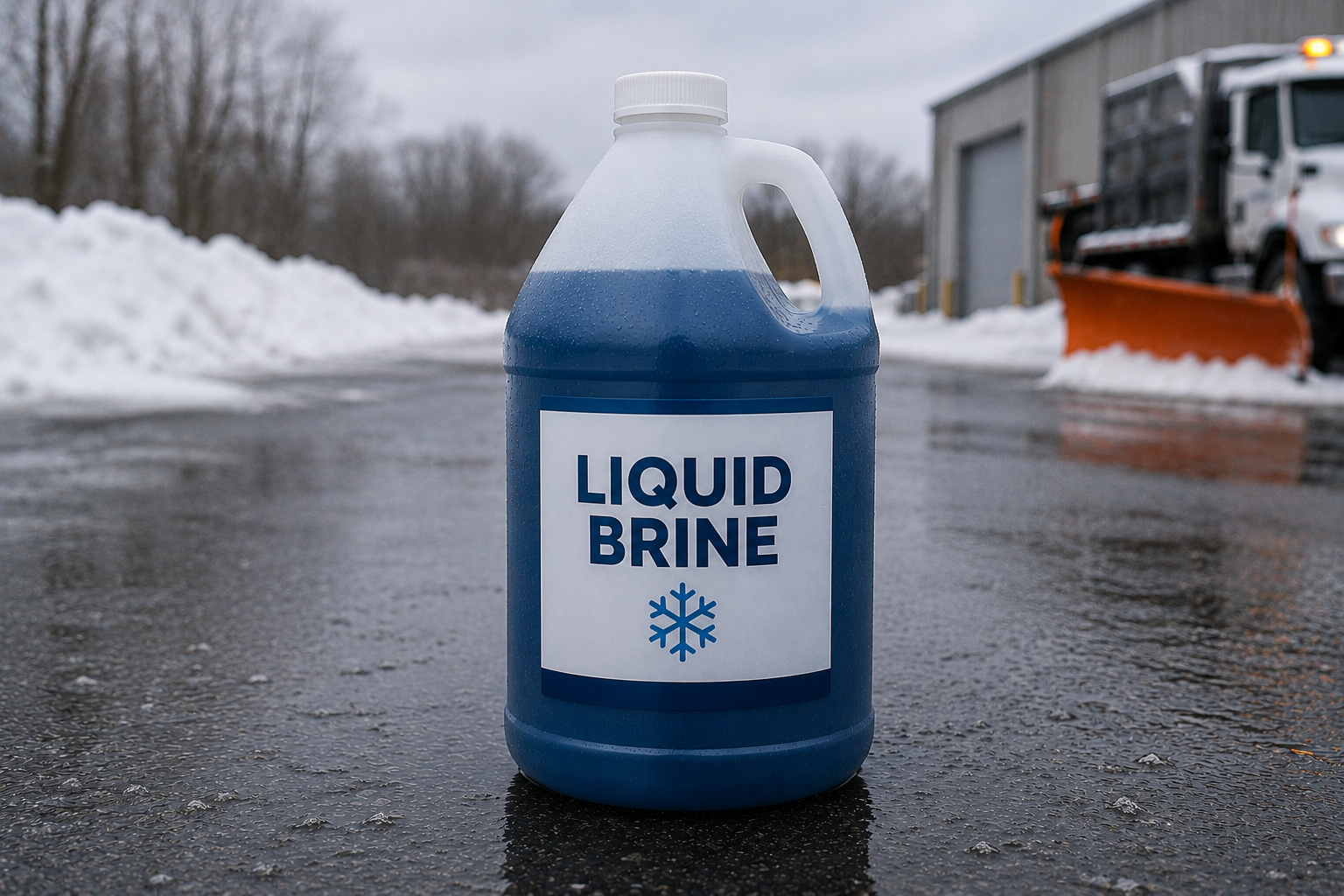
Liquid brine is a saltwater solution that is applied to pavement before winter storms. Unlike traditional rock salt, liquid brine bonds to pavement and helps prevent snow and ice from sticking, making snow removal faster, safer and more efficient.
Liquid brine can be used for both anti-icing and de-icing applications on roads, parking lots, and other paved surfaces, which is it is also commonly referred to as road brine.

Liquid brine begins working immediately upon application, eliminating the delay required for rock salt to dissolve. By preventing snow and ice bonding to pavement, plowing becomes faster, more effective, and requires less material after the snow

Applying liquid brine before a storm helps maintain safer parking lots, sidewalks, and driveways. Pretreated surfaces are easier to clear, helping businesses remain accessible to customers and employees during winter weather.
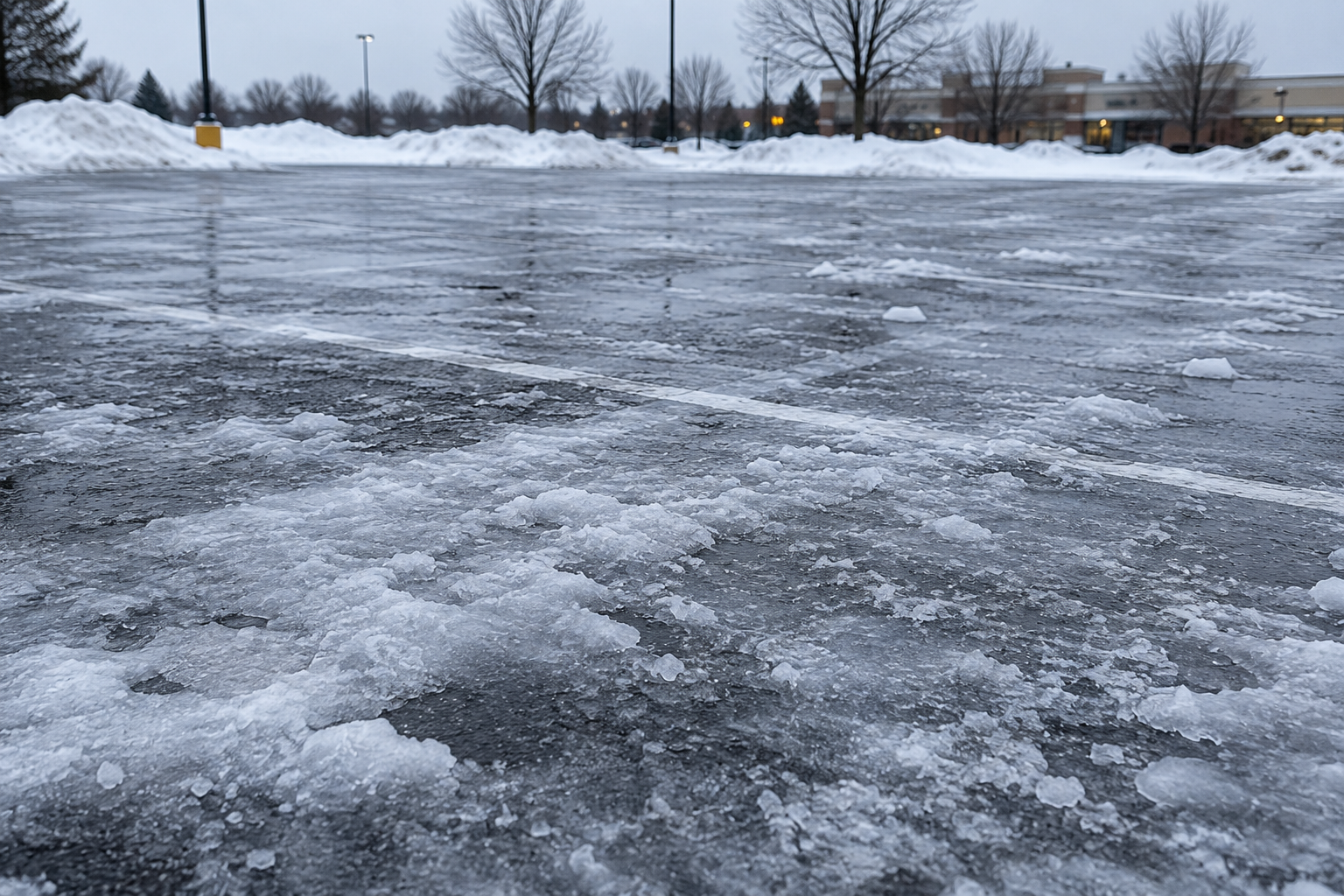
Unlike traditional rock salt, liquid brine creates a protective barrier on the pavement before precipitation begins. This helps stop snow and ice from bonding to the surface, making removal significantly easier once snowfall starts.

Lower application rates allows contractors and property managers to cover more area while using less material. Reduced labor, lower salt consumption, and easier cleanup can all contribute to lower winter maintenance costs.

Liquid brine can reduce salt usage by up to 35% during pretreatment applications and up to 70% during post-treatment, helping minimize waste while maintaining effective ice control.

Because liquid brine stays where it is applied, there is virtually no bounce or scatter like traditional rock salt. Using less material also helps reduce chloride runoff into nearby soil, waterways, and drinking water supplies.
Repeated chloride exposure can contribute to corrosion, concrete deterioration, landscape stress, and salt runoff. For commercial properties, those effects can turn a low-cost deicer into long-term repair and maintenance expenses.
Chlorides can penetrate concrete and contribute to corrosion of embedded reinforcing steel, increasing the risk of deterioration and repair.
Salt exposure accelerates corrosion of metal surfaces and components, adding another potential cost to winter property maintenance.
Excess salt can stress roadside and parking-lot vegetation and alter soil conditions around heavily treated surfaces.
Chloride runoff can move into surface water and groundwater, creating environmental impacts beyond the treated pavement.
Liquid brine is applied proactively and evenly before winter weather arrives, helping prevent snow and ice from bonding to pavement and reducing reliance on repeated granular applications.
Sources: U.S. Environmental Protection Agency (road-salt corrosion and environmental impacts) and Federal Highway Administration (chloride-related concrete deterioration).
Engineered for Maximum Performance
Liquid brine is already dissolved and ready to work when applied. Unlike rock salt, which needs moisture before becoming effective, brine begins working immediately to help prevent snow and ice from bonding to pavement.
Why 23.3% Salt Concentration Matters
Our brine is manufactured at approximately 23% salt concentration, the optimal concentration for sodium chloride brine. Adding more salt doesn't always improve performance and can actually raise the solution's freezing point.
Designed to Prevent Ice Before It Forms
Applied before winter weather arrives, liquid brine creates a barrier that helps prevent snow and ice from bonding to pavement. Applications can often be made 24-48 hours before snowfall.
Better Performance in Extreme Conditions
For demanding winter conditions, performance additives can enhance adhesion, reduce corrosion, improve traction, and extend cold-weather performance.
Better Adhesion | Reduced Corrosion | Improved Traction | Cold-Weather Performance
Consistent Quality You Can Depend On
Every batch is produced for consistent, dependable performance. Whether you need a few gallons or a bulk order, Berkshire Snow Solutions offers convenient pickup and delivery options.